


What It Means to Charge for Directory Listings
Charging for directory listings means that users pay to submit, maintain, or enhance their listings on your directory website. This payment can be a one-time fee, a recurring membership, or part of a tiered pricing structure.
It is important to distinguish between paying to submit a listing and paying to keep a listing visible over time. Some directories charge for initial submission, while others charge for ongoing presence, access, or limits. These two approaches solve different business problems and should not be treated as the same.
Paid directory listings are not limited to charging for visibility alone. In many cases, payment is tied to access, limits, ownership, or continued presence rather than simple placement. Understanding this distinction helps avoid confusion when designing pricing plans.

At its core, charging for directory listings is about exchanging value. Businesses or users pay because your directory provides exposure, credibility, leads, or convenience that justifies the cost.
Common Models for Paid Directory Listings

There is no single correct way to charge for directory listings. Different directories succeed with different models depending on their niche, audience, and stage of growth.
One-Time Paid Listing Submission
In this model, users pay a single fee to submit a listing. The listing is then published for a defined period or indefinitely, depending on how the directory is structured.
This approach works well for simple directories where listings do not require ongoing management. It is easy to understand and reduces friction for users who prefer not to commit to subscriptions.
Recurring Membership Plans
Membership-based pricing allows users to pay on a recurring basis to access listing features and maintain visibility on the directory.
Membership plans often include limits, such as the number of listings allowed per user or the duration of listing visibility. This model provides predictable revenue and works well for directories that offer ongoing value.
Tiered Packages and Feature-Based Plans
Tiered pricing structures offer multiple plans with different limits and benefits. Lower tiers may include basic listing access, while higher tiers unlock additional features, extended visibility, or increased limits.
This model gives users flexibility and allows directory owners to serve different segments without forcing everyone into the same plan.
What You Are Really Charging For
When users pay for directory listings, they are rarely paying just for a form submission.
In practice, directories charge for one or more of the following:
- Access to a qualified audience
- Ongoing visibility within a trusted platform
- Credibility gained by being listed in a curated directory
- Limits such as the number of listings or duration of visibility
- Convenience and time saved compared to self-promotion
Understanding this helps directory owners price listings based on value rather than features alone.
One-Time Payment vs Membership Plans
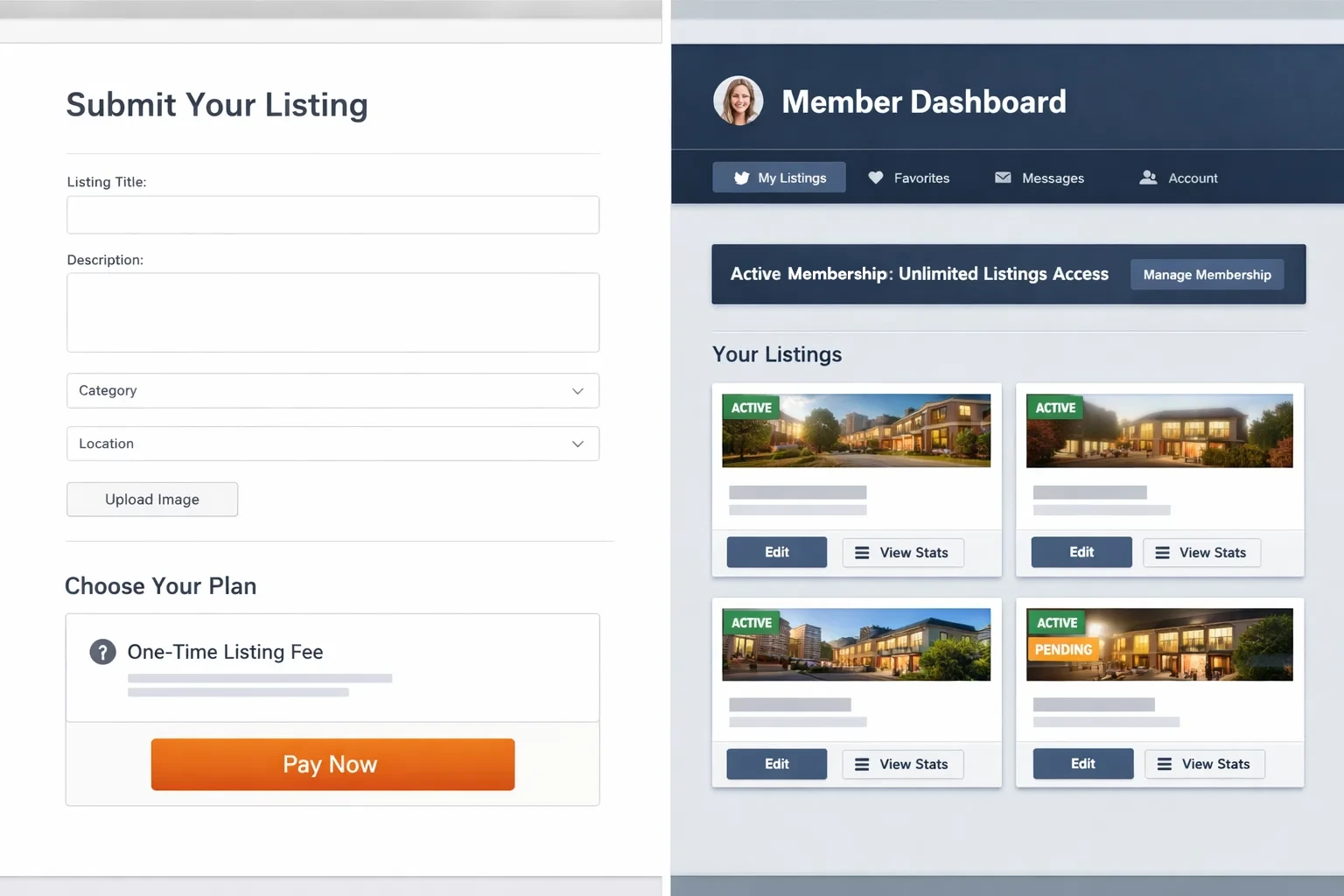
Choosing between one-time payments and membership plans is one of the most important decisions when charging for directory listings.
One-time payments are easier to adopt and may convert better in the early stages of a directory. They are suitable when listings have long-term value without frequent updates.
Membership plans, on the other hand, create recurring revenue and encourage long-term engagement. They are more suitable for directories where listings need to stay current or where users receive ongoing benefits.
Many successful directories start with one-time payments and gradually introduce membership plans as their audience and value proposition mature.
How to Decide Which Model Fits Your Directory

The right pricing model depends on several practical factors.
Directories serving businesses with clear commercial intent often succeed with paid submissions or memberships. Trust and authority play a major role, as users are more willing to pay when the directory feels established.
For example, a local business directory may succeed with simple paid submissions once it attracts consistent traffic, while a professional niche directory often benefits from membership plans that support long-term presence.
Traffic volume also matters. Higher traffic can justify higher fees, while smaller directories may need simpler, lower-friction pricing to encourage adoption.
It is also important to consider how long listings remain valuable. Short-lived listings may suit one-time payments, while ongoing listings benefit from recurring plans.
How Listdom Supports Paid Submissions and Memberships
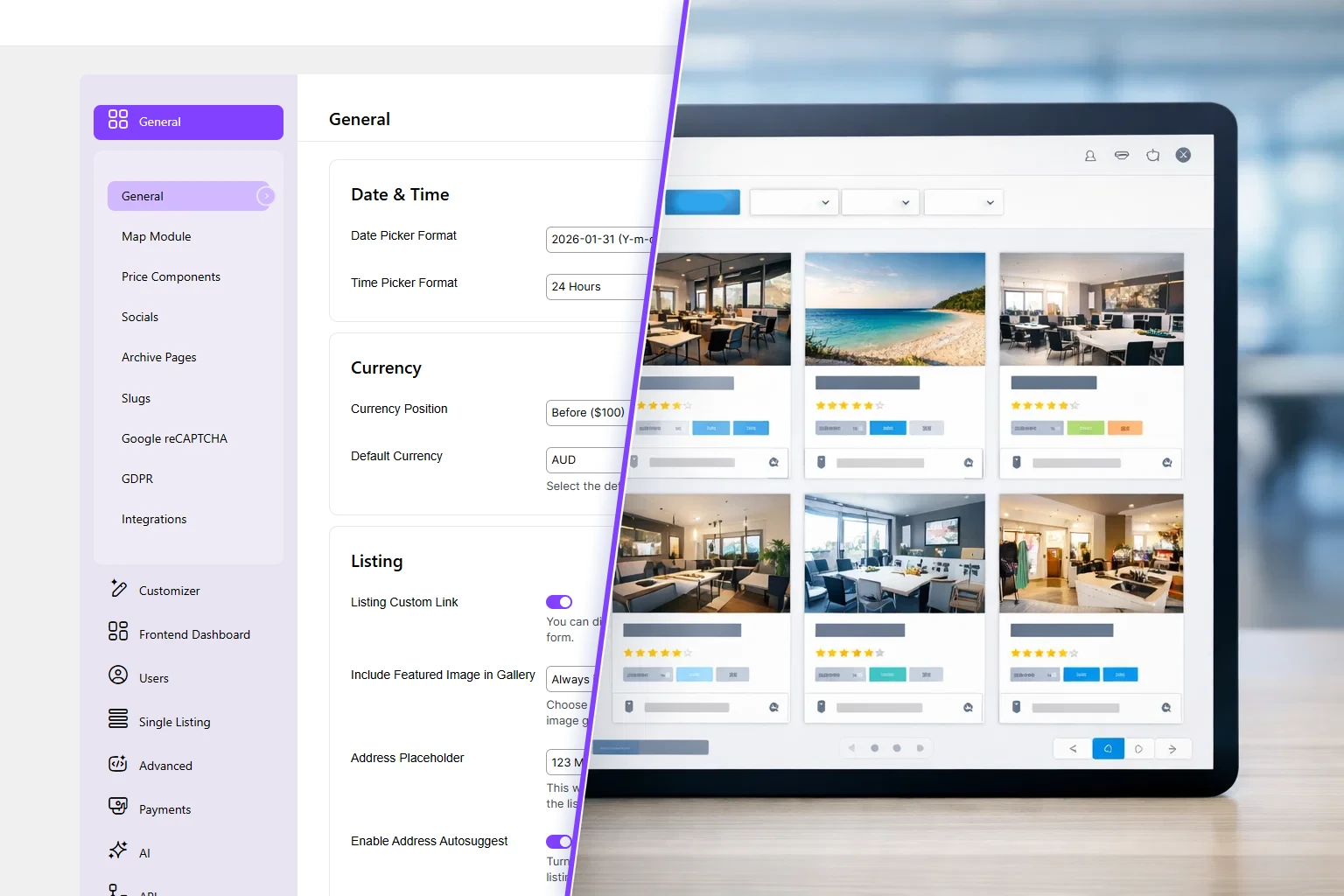
Listdom provides flexible tools that support all common paid directory models, including one-time paid submissions, recurring memberships, and tiered pricing structures, without locking directory owners into rigid setups.
Directory owners can control who is allowed to submit listings, how many listings each user can manage, and how long listings remain visible. This makes it possible to design pricing models that evolve over time, from simple paid submissions to more advanced membership-based access.
Listdom manages both paid submissions and membership-based access through its dedicated Listdom Membership Addon. This addon is not limited to recurring payments. It can be used to control all submission-related models, including one-time paid submissions, recurring memberships, and tiered plans. Directory owners can use it to define who can submit listings, how many listings each user can create, and how listing visibility is tied to an active plan or submission rules, providing a unified and flexible monetization structure.
Listdom includes its own built-in payment engine for handling directory-related payments, and it also supports integration with WooCommerce for directories that prefer to manage payments through WooCommerce workflows. This flexibility allows directory owners to choose the payment system that best fits their business model.
Pricing models often evolve. Many directories start with free or low-cost submissions, introduce paid listings once value is clear, and later expand into membership plans and tiers as trust and traffic grow.
Detailed configuration options and setup instructions are covered in the official documentation rather than this guide.
Common Mistakes When Charging for Directory Listings
One common mistake is charging too early, before the directory has built trust or traffic. Users are less likely to pay when value is not yet clear.
Another mistake is creating overly complex pricing plans. Too many options or unclear differences between plans can reduce conversions.
Some directories also struggle by locking users into rigid plans without upgrade paths. Flexible pricing makes it easier for users to grow with the directory.
When Charging for Listings Is Not the Right Choice
Charging for directory listings is not always the best initial strategy.
New directories often benefit from starting with free listings to build content, traffic, and credibility. Community-driven or non-commercial directories may also struggle with paid submissions.
Understanding when to delay monetization can protect long-term growth and user trust.
How Paid Directory Models Usually Evolve

Most directory websites do not start with complex pricing.
A common progression is to begin with free listings to build content and traffic, introduce paid submissions once value is established, and later add membership plans and upgrades as the directory matures.
This evolution allows directory owners to monetize without blocking early growth or damaging trust.
Combining Paid Submissions with Other Monetization Methods
Paid submissions and memberships work best when combined with other monetization methods. Using multiple monetization options allows directory owners to address different user needs and increase overall revenue without forcing all users into the same pricing structure.
Featured Listings and Priority Placement
Featured listings provide additional visibility for users who want more exposure beyond what is included in their submission or membership plan. This works well as an optional upgrade for businesses that want to stand out in search results or category pages.
Booking and Reservation Monetization
Booking and reservation features add transactional value to directory listings. This method is especially effective for service-based directories, such as hotels, events, or appointments, where users are ready to take action after discovering a listing.
Advertising and Sponsored Content
Advertising allows directory owners to monetize traffic without charging all users directly. Sponsored placements, banner ads, or promoted sections can generate revenue while keeping basic listing access affordable.
Affiliate Monetization
Affiliate monetization offers a way to earn revenue by recommending relevant third-party services or tools. This method works best as a complementary option, especially for directories with content-rich listings or resource sections.
This layered approach allows directory owners to serve different user needs and monetization preferences without relying on a single pricing model.
What to Do Next
If charging for directory listings aligns with your goals, the next step is to review the official Listdom documentation and explore the available configuration options.
To understand how paid submissions fit into a complete monetization strategy, review the main monetization guide:
https://listdom.net/blog/how-to-monetize-a-directory-listing-website/
If you have any questions or need help, you can contact Listdom support.
Frequently Asked Questions
-
Should I charge users to submit listings?
Charging makes sense when your directory offers clear value, trust, or visibility. Early-stage directories may benefit from starting free.
-
Are membership plans better than one-time payments?
Membership plans provide recurring revenue, but one-time payments may convert better initially. The best choice depends on your directory’s value model.
-
Can I limit the number of listings per user?
Yes. Listing limits are a common way to structure pricing and manage directory quality.
-
Does charging for listings affect SEO?
Charging does not directly harm SEO, but directories should ensure that valuable content remains accessible to search engines.
Final Thoughts
Charging for directory listings is not about copying what other directories do. It is about choosing a model that matches your audience, niche, and long-term goals.
By starting with a clear strategy and remaining flexible, directory owners can build sustainable revenue without compromising user experience.


